
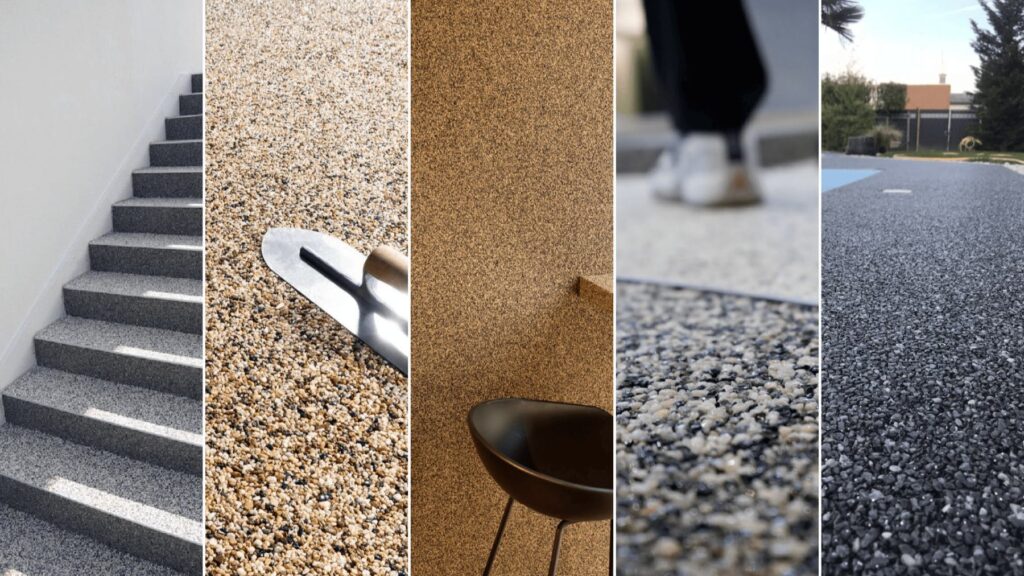
Resin Bound Stone Surfacing Solutions
Premium resin binders and decorative aggregates for durable, attractive outdoor surfaces.
Why Choose Keyenli Resin Bound Stone System
Explore resin bound stone materials from Keyenli, including resin binders and decorative aggregates for driveways, pathways and landscaping projects.
Porosity: 15%-25%
High permeability: The porosity of resin-washed stone flooring ranges from 15% to 25%.
Environmental Protection
Supports groundwater recharge, improves soil conditions, and helps reduce flooding, especially in ecological slope protection.
Temperature Regulation
Helps regulate ground temperature and humidity while reducing the urban heat island effect.
Lifespan
High wear resistance: Long-lasting service life.
Permeability: 270 L/m
Permeability reaches 270 L/min/m, exceeding the drainage capacity of top systems during heavy rainfall.
Sound Absorption and Noise Reduction
Absorbs sound, reduces noise and glare, and enhances traffic safety.
Anti-slip
High-hardness resin bonds natural stone, enhancing friction and slip resistance.
Color
Vibrant Colors: Enhances visual impact and warning visibility.
What Is Keyenli Resin Bound Stone
We supply resin binders, decorative aggregates and complete resin bound stone material systems for residential, commercial and landscaping projects. Our team helps distributors and contractors select suitable materials based on project requirements, site conditions and desired finishes.
Keyenli Resin Washed Stone is an innovative decorative surfacing material that combines natural stone aggregates with high-performance resin binders to create an attractive, durable and seamless finish for a variety of outdoor applications.
Also known as liquid carpet or resin-bound stone surfacing, this decorative flooring system combines natural stone aggregates with high-performance resin binders. Carefully formulated and processed, it creates a durable, attractive surface with excellent wear and stain resistance.
Depending on the selected materials and surface design, the system can also provide slip resistance and a comfortable feel underfoot, making it suitable for a variety of residential, commercial, and landscaping applications.
Resin Bound Stone vs. Traditional Washed Stone
| Features | Traditional Washed Stone | Keyenli Resin-Bound Stone |
|---|---|---|
| Bonding Material | Cement | High-performance synthetic resin |
| Permeability | Limited permeability; may cause water accumulation | Excellent drainage through its permeable structure |
| Crack Resistance | May crack due to moisture or temperature changes | Flexible resin binder helps improve crack resistance |
| Aesthetic Appeal | Color may fade or become discolored over time | Versatile colors and natural stone textures |
| Slip Resistance | Varies depending on the stone and surface finish | Textured surface can provide good slip resistance |
| Construction | Requires careful control of cement mixing and washing | Can be efficiently mixed and applied by trained installers |
Keyenli Modified Resin vs. Epoxy Resin
| Comparison Items | Epoxy Resin | Keyenli Modified Resin (Polyurethane Series) |
|---|---|---|
| Yellowing Resistance | May begin to yellow within months to a few years, even indoors. | Designed to maintain color stability for a longer period. |
| Mixing Ratio with Pebbles | 24 : 0.5 : 0.5 | 20 : 0.5 : 0.5 |
| Coating Rate | ||
| Chemical Composition | Epoxy resin and curing agent; may contain components prone to discoloration. | Modified resin system formulated for improved color stability. |
| Bond Strength | Typical peel strength: 30–40 N/mm. | Typical peel strength: above 50 N/mm. |
| Environmental Profile | Available in water-based and solvent-based formulations. | Refer to the product technical data sheet for solids content and solvent information. |
| Weather Resistance | Performance can be affected by temperature and environmental conditions. | Designed for outdoor applications; suitability depends on product specifications. |
| Curing Time | Varies from minutes to several hours, depending on formulation. | May cure rapidly, depending on formulation and conditions. |
| Flexibility & Toughness | Generally harder, with relatively low flexibility. | Offers flexibility and toughness to help accommodate movement. |
| Appearance & Texture | Typically forms a smooth surface with some gloss. | Can provide a natural-looking finish that complements stone aggregates. |
| Slip Resistance | Slip resistance depends on the finished surface. | Stone aggregates create a textured surface that can improve slip resistance. |
| Moisture Resistance & Waterproofing | Water resistance and immersion performance vary by formulation. | Moisture resistance and adhesion depend on formulation and substrate conditions. |
Resin-bond Stone Application Process

01.Primer Application
Mix primer components A and B (3:1) evenly. Apply one coat with a roller and allow 24 hours to dry.
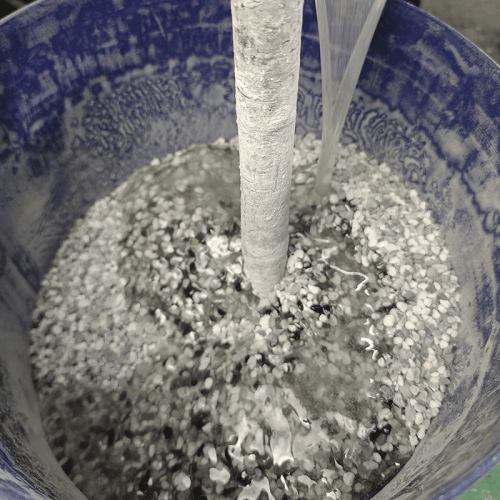
02.Material Mixing
Mix resin components A and B (0.75 kg + 0.25 kg), add to 20 kg of main material, and stir thoroughly. Use within 30 minutes. Do not add water.
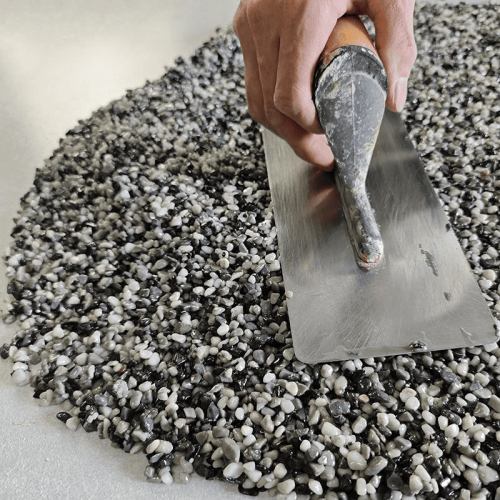
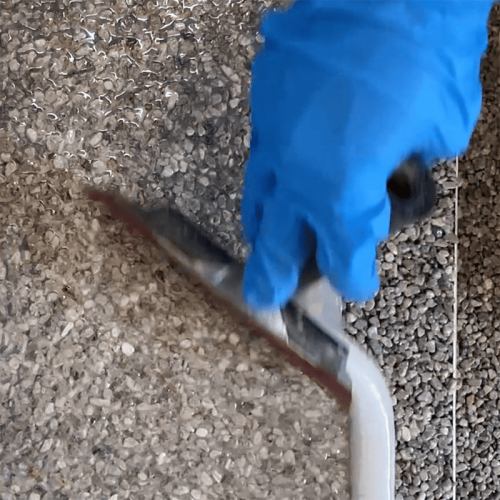
03.Surface Smoothing
.Scrape and press flat, wait 24 hours for surface curing
04.Topcoat Application
(Optional) Mix the hardener and topcoat at a 3:1 ratio, then apply one coat
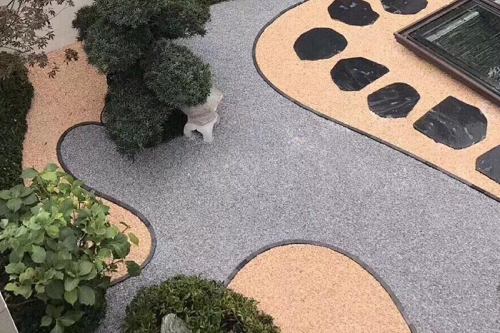
Common Applications of Resin-bond Stone
Discover seamless wall finishes that bring texture, character, and elegance to modern spaces

Pedestrian Walkways and Community Pathways
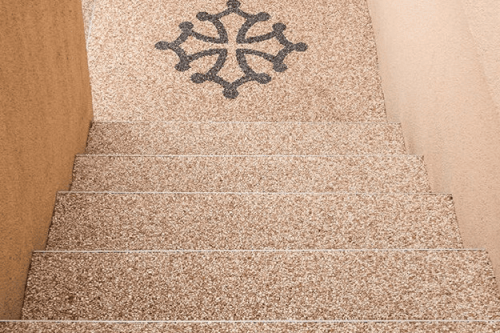
Outdoor Pathways in Schools and Medical Facilities
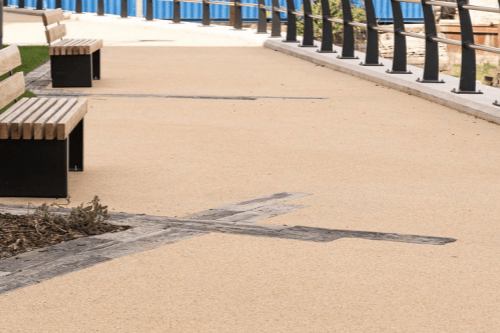
Park Green Spaces and Landscape Pathways
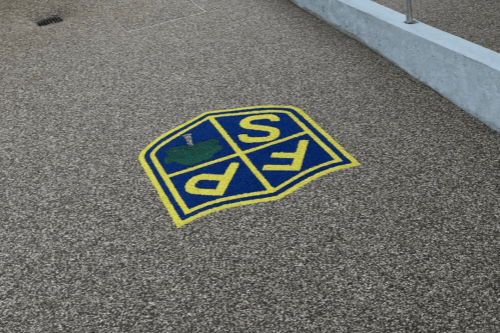
Paving for Religious and Cultural Spaces
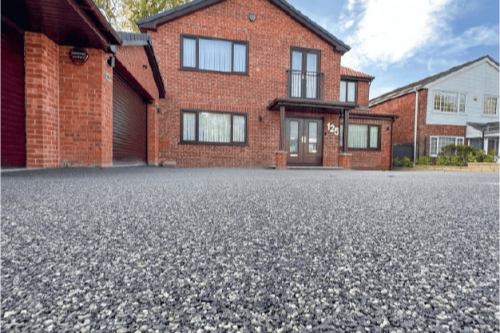
Private Residential Courtyards and Driveways
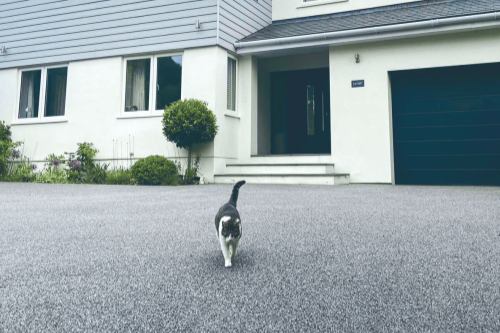
Municipal Projects and Public Infrastructure
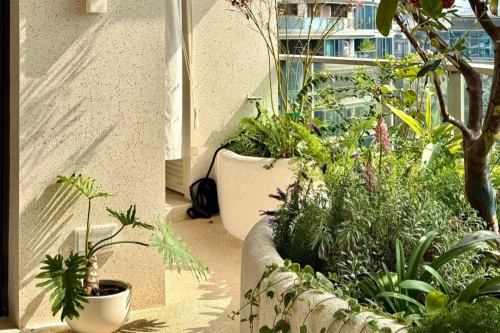
Commercial Spaces and Building Facades
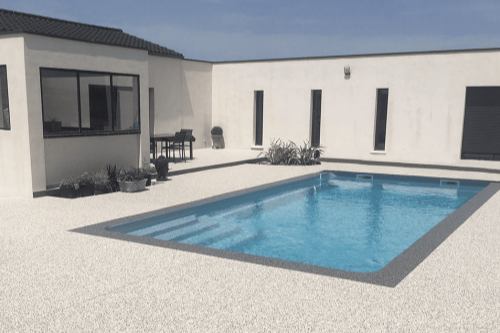
Swimming Pool Surrounds
Resin-bound Stone FAQ
What is resin bound stone?
It is a seamless decorative surface made by using resin instead of cement to bind colored stones and quartz sand together. It is commonly used for courtyards, terraces, pool surrounds, garden beds, and indoor walls and floors.
How is resin-bound stone different from traditional cement-based washed stone?
The main difference is the binding material. Resin-bound stone is less prone to efflorescence, loose stones, and cracking. It also offers more uniform colors and a longer service life.
Where can resin-bound stone be used?
It is suitable for garden pathways, patios, pool surrounds, flower beds, built-in benches, and indoor walls and floors. For areas exposed to prolonged water immersion, strong acids or alkalis, oil contamination, or direct sunlight over large light-colored surfaces, additional protective measures should be considered in advance.
What are the environmental requirements for installation?
The recommended application temperature is 5–35°C, with relative humidity below 80%. Low temperatures can slow curing, while excessive heat may cause bubbling or cracking. Installation is not recommended in rainy weather or on a damp substrate.
Why does resin-bound stone become hollow or peel off?
This is usually caused by substrate problems. Dust, oil stains, loose or sandy surfaces, moisture, and insufficient substrate strength can all affect adhesion. Existing floors usually need to be ground, degreased, repaired, and primed before application.
How long does resin-bound stone last?
High-quality outdoor systems can last 15–20 years, provided the materials, substrate preparation, installation, and protective topcoat are all properly handled. Low-quality, low-cost systems may start showing loose stones, yellowing, or blistering within just 2–3 years.
Tell Us About Your Project
Looking for resin binders, decorative aggregates or a complete resin bound stone system? Send us your requirements and our team will help you identify suitable options.