
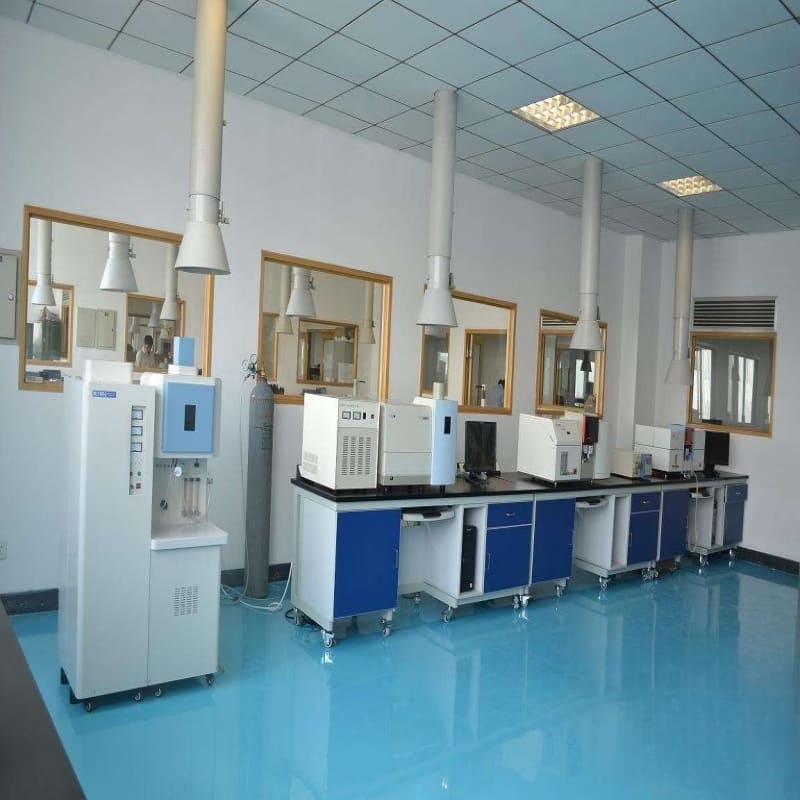
ESD Epoxy Self-Leveling Flooring System
Static Dissipative | Dust-Free | Seamless | High Wear Resistance
ESD Epoxy Self-Leveling Flooring System is a seamless conductive flooring solution for electronics manufacturing plants, clean rooms, laboratories, and data centers. It offers reliable electrostatic discharge protection, superior wear resistance, and long-term durability.
 Thickness: 3.0–5.0 mm
Service Life: 8-10 Years
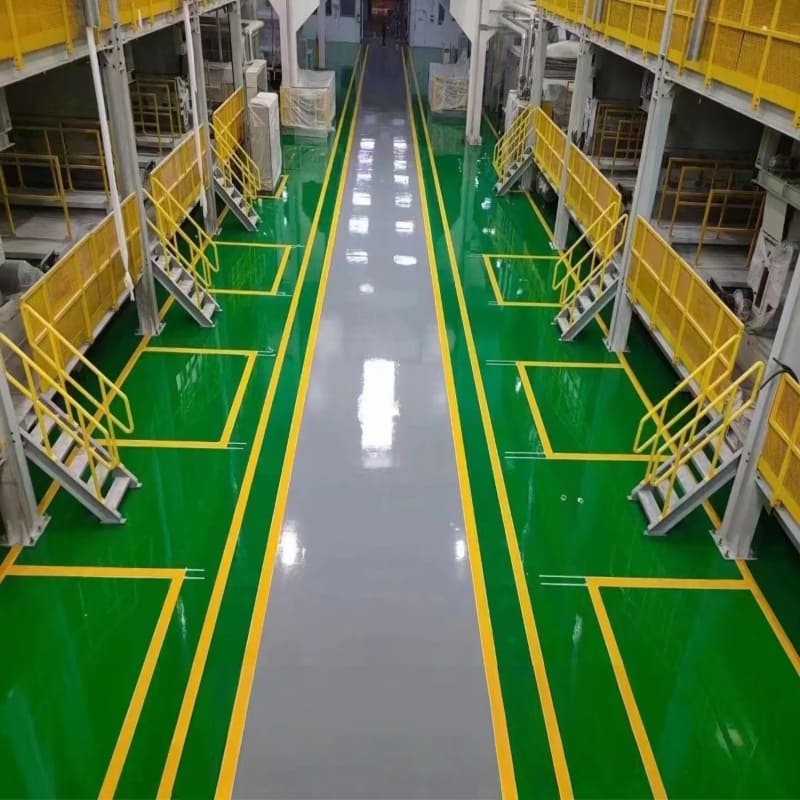
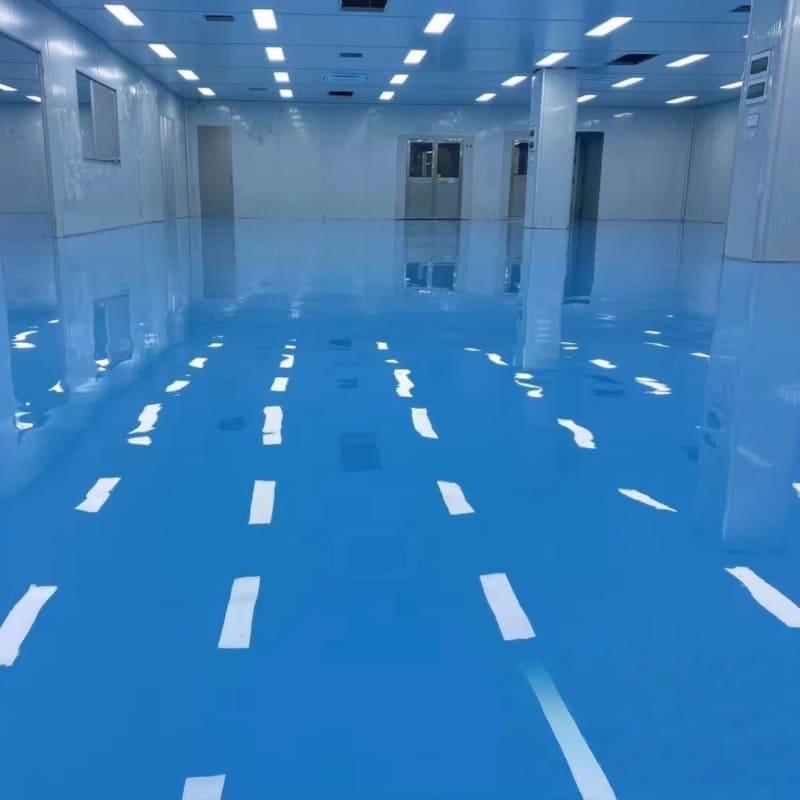
Seamless High-Gloss Finish
Permanent ESD Protection
Fast Static Charge Dissipation
Seamless Decorative Finish
Creates a smooth, elegant, and visually appealing surface.
High Mechanical Strength
Withstands heavy equipment and daily production activities.
Static Dissipative Performance
Controls electrostatic discharge and protects sensitive equipment.
Chemical Resistance
Resists common industrial chemicals and cleaning agents.
Extreme Abrasion Resistance
Designed for continuous traffic and industrial operations.
Easy Maintenance
Seamless flooring minimizes dust accumulation.
Reliable Grounding Protection
Provides stable electrical resistance performance.
Long Service Life
Engineered for long-term ESD protection and durability.
ESD Epoxy Self-Leveling Flooring System Technical Specifications
| Technical Property | Performance Value |
|---|---|
| Fire Resistance | B1 Level |
| Abrasion Resistance (750g / 500r) | 0.024 g |
| Tensile Bond Strength | 3.6 MPa |
| Tensile Bond Strength After Water Immersion | 3.4 MPa |
| Initial Fluidity | 207 mm |
| Shore Hardness (Type D) | 88 |
| Slip Resistance (Dry Friction Coefficient) | 0.81 |
| Surface Resistance | 5×10⁴ – 1×10⁹ Ω |
| Resistance to Ground | 5×10⁴ – 1×10⁹ Ω |
| Human / Footwear / Grounding System Resistance | < 1×10⁹ Ω |
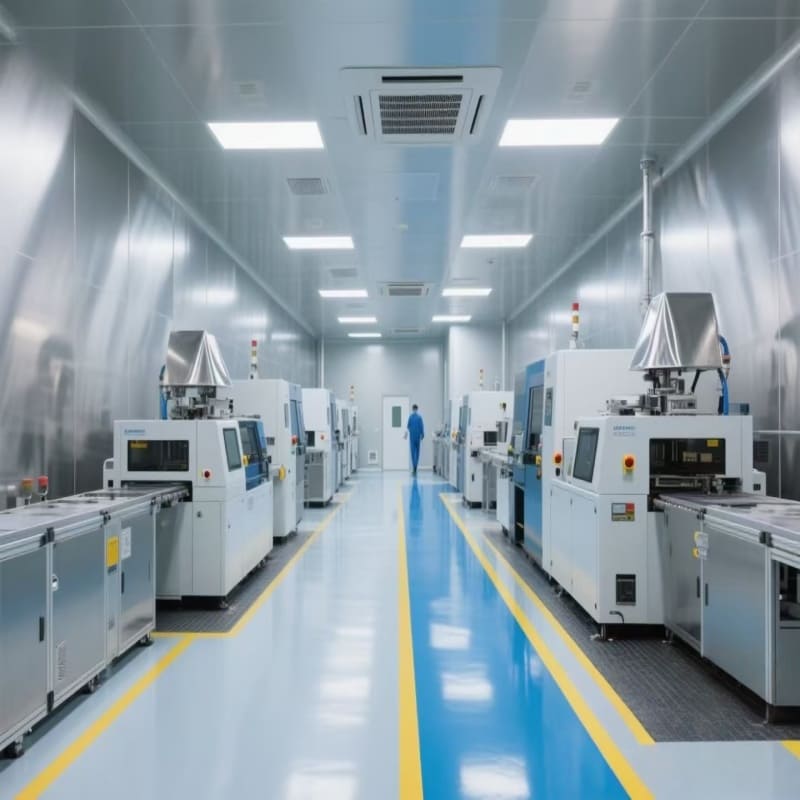
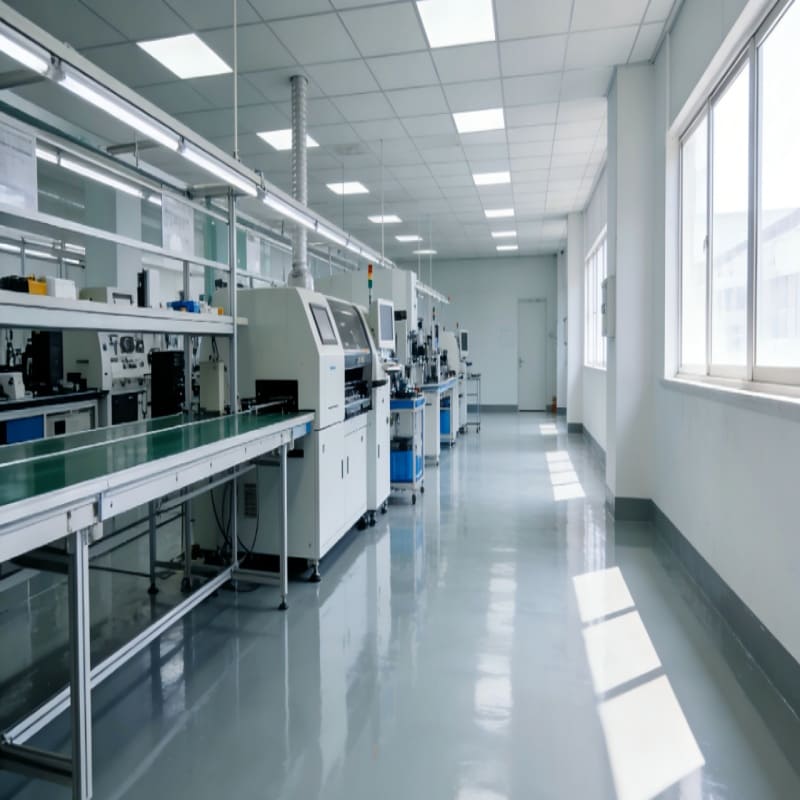
Electronics Manufacturing Plants
Semiconductor Facilities
Data Centers
Pharmaceutical Plants
Medical Device Manufacturing
Battery Manufacturing Plants
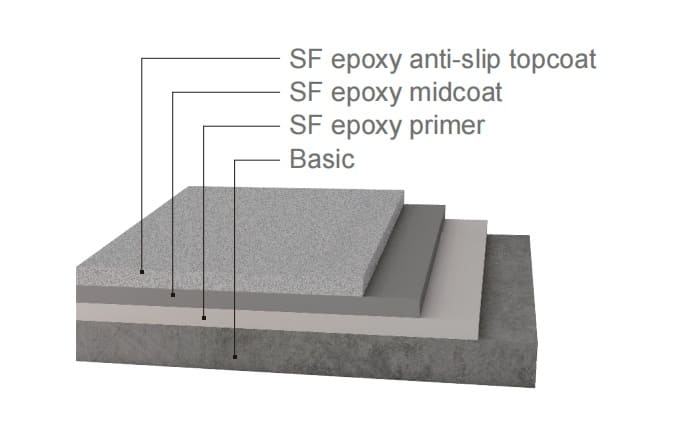
ESD epoxy self-leveling flooring Installation Process
1.Primer Coat
Apply solvent-free epoxy primer to improve adhesion and seal the concrete substrate.
2.Epoxy Mortar Layer
Apply epoxy mortar mixed with quartz sand to enhance strength and leveling performance.
3.Putty Layer
Fill pores and surface imperfections to create a smooth base.
4.Copper Foil Grounding Network
Install conductive copper foil according to the ESD grounding design requirements.Grid Size: 6m × 6m
5.Conductive Epoxy Intermediate Coat
Apply conductive epoxy coating to ensure stable electrical conductivity throughout the flooring system.
6.Anti-Static Self-Leveling Topcoat
Apply anti-static epoxy self-leveling coating to achieve a seamless, dust-free, and ESD-safe surface.
1.Primer Coat Coverage: 0.15–0.20 kg/m²
2.Epoxy Mortar Layer Coverage: 0.50–0.80 kg/m²
3.Putty Layer Coverage: 0.15–0.30 kg/m²
4.Conductive Epoxy Intermediate Coat Coverage: 0.20–0.3 kg/m²
5. Anti-Static Self-Leveling Topcoat Coverage: 0.8–1.2 kg/m²
1.What is the ESD Epoxy Self-Leveling Flooring?
SD Epoxy Self-Leveling Flooring is a high-performance flooring system designed to provide electrostatic discharge (ESD) protection while delivering a seamless, durable, and easy-to-clean surface. It is suitable for industrial and commercial environments where electrostatic control, cleanliness, wear resistance, and surface durability are essential.
1. Composition & ESD Protection
Material Composition
The system is formulated with epoxy resin, available in solvent-free or water-based formulations, combined with conductive materials such as conductive carbon black, conductive mica powder, or conductive fibers.
Together with a conductive copper foil grounding system, these components form an effective conductive pathway throughout the flooring system.
ESD Protection Principle
The conductive flooring system helps safely dissipate electrostatic charges from the floor surface through the grounding system, reducing static accumulation and helping protect sensitive electronic components and equipment from electrostatic discharge.
The electrical resistance can be designed and controlled according to the required ESD standards and project specifications.
2. Key Performance Features
Reliable ESD Protection
The integrated conductive network provides controlled electrostatic dissipation when properly installed and connected to the grounding system, helping maintain a stable ESD-protected environment.
Seamless & Easy to Clean
Self-leveling technology provides excellent flow and leveling performance, creating a seamless, smooth, and easy-to-clean surface with minimal joints where dust and contaminants can accumulate.
Wear, Impact & Load Resistance
After curing, the flooring forms a dense and durable surface with good wear resistance, impact resistance, and compressive strength.
It can be designed for areas exposed to forklifts, AGVs, equipment, and frequent pedestrian traffic.
Chemical & Oil Resistance
The flooring provides resistance to common oils, chemicals, and industrial contaminants. Specific chemical resistance can be customized according to project requirements.
Low-VOC Options
Solvent-free and water-based formulations are available to help reduce VOC emissions and installation odor, making them suitable for environments with strict indoor air-quality requirements.
3. Typical Applications
Electronics & Semiconductor Manufacturing
- Semiconductor production areas
- SMT production lines
- PCB manufacturing
- Electronic component assembly
- Precision electronics workshops
Helps protect sensitive electronic components from electrostatic discharge.
Cleanrooms & Pharmaceutical Facilities
- Pharmaceutical GMP facilities
- ESD cleanrooms
- Laboratories
- Sterile production areas
- Medical facilities
Provides a seamless and easy-to-clean surface while supporting ESD control requirements.
Data Centers & Computer Rooms
- Data centers
- Server rooms
- Computer rooms
- Electronic equipment rooms
Helps reduce the risk of electrostatic discharge that may affect sensitive electronic equipment.
New Energy & Battery Manufacturing
- Lithium battery production
- Battery assembly areas
- Energy storage equipment manufacturing
- New energy component production
Provides controlled electrostatic dissipation for sensitive manufacturing environments.
Other Industrial Applications
- Precision instrument manufacturing
- Optical equipment production
- Research and development facilities
- High-tech manufacturing
- ESD-protected work areas
2What Is the Difference Between ESD Flooring and Regular Epoxy Flooring?
Regular epoxy flooring mainly provides wear resistance, chemical resistance, and surface protection, while ESD epoxy flooring is specifically designed to dissipate electrostatic charges through a conductive network and grounding system.
ESD flooring is therefore more suitable for electronics, semiconductor, battery, pharmaceutical, data center, and other static-sensitive environments.
3.Where Is ESD Epoxy Self-Leveling Flooring Used?
Typical applications include:
- Semiconductor and electronics factories
- PCB and SMT workshops
- Lithium battery and new energy facilities
- Pharmaceutical and GMP cleanrooms
- Laboratories
- Data centers and server rooms
- Precision instrument manufacturing
- Automotive electronics
- Optical equipment manufacturing
- Chemical and industrial facilities
4.How Does ESD Epoxy Flooring Work?
The flooring system incorporates conductive materials and a grounding system. Static charges generated on the floor surface are transferred through the conductive network and safely dissipated to ground, helping prevent excessive static accumulation and electrostatic discharge.
5.How long does ESD epoxy flooring last?
With proper substrate preparation, professional installation, suitable system design, and regular maintenance, ESD epoxy flooring can typically provide 8–10 years of service under normal industrial conditions.
Actual service life depends on traffic, chemical exposure, environmental conditions, substrate quality, and maintenance.